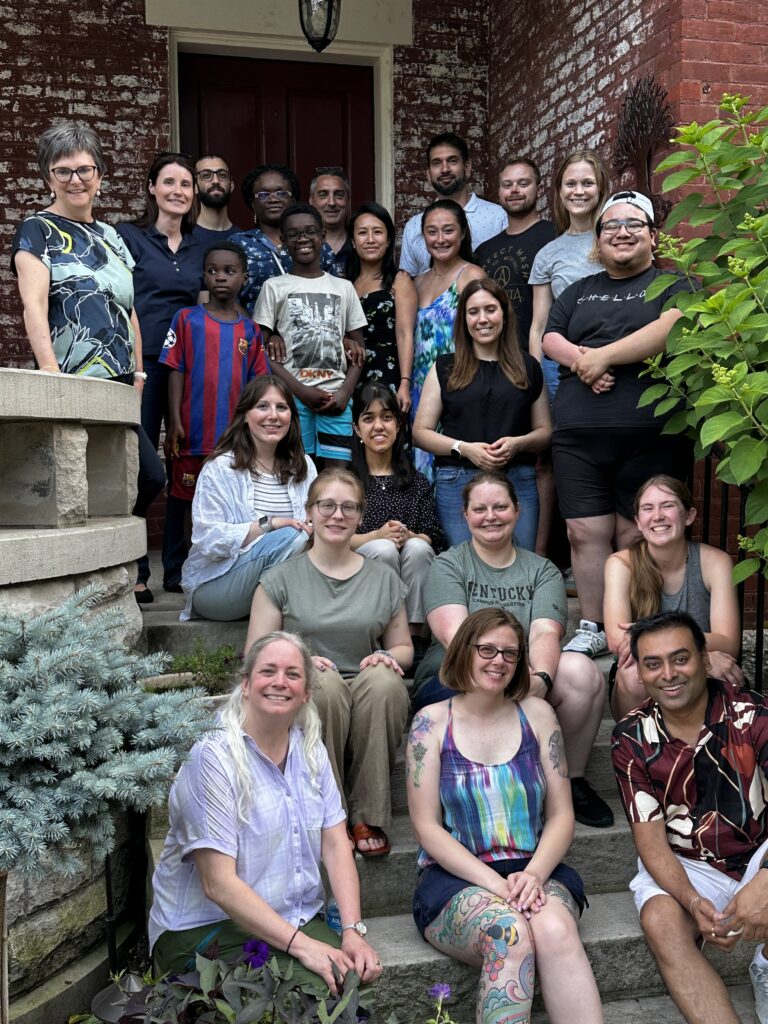
The BHL Annual Holiday Party brought the team together to mark the end of the year. We shared food, spent time together, and played a white elephant gift exchange. It was a nice opportunity to connect outside the lab!
Home » News

The BHL Annual Holiday Party brought the team together to mark the end of the year. We shared food, spent time together, and played a white elephant gift exchange. It was a nice opportunity to connect outside the lab!

We held our annual BHL Winter Retreat to reflect on our achievements in 2025 and provide an outlook on 2026. Every lab member gave a presentation, we discussed and shared ideas, and set goals for the coming months.

Bjoern attended the AES Annual Meeting in Atlanta and presented a poster on the team’s findings on CBD in epilepsy. Bjoern met with former lab members and colleagues, and learned about current advances in epilepsy research and emerging therapies.

Avijit presented a poster at the UK COBRE CNS Metabolism Symposium, where he shared his work on transporter regulation in epilepsy and engaged with current research on metabolism in CNS disorders.

Congratulations to Manekya on being selected to give an oral presentation at the PUNDS Graduate Student Meeting at Purdue University. This selection recognizes her work and provides an opportunity to share her research with a broader scientific audience.

The BHL team participated at the UK Neuroscience Clinical-Translational Research Symposium, where Manekya, Hana, and Hady presented posters. Anika moderated the Research Data Blitz session, which highlighted research by early-career investigators.

Members of the BHL team presented posters at the Annual Sanders-Brown Center on Aging Markesbery Symposium. Congratulations to Hana for an Outstanding Poster Award and to Avijit for a Costume Award!

We welcomed Julia Schulz-Pauly, a former BHL PhD student and current Principal Scientist at Amgen, back to the lab and the UK College of Pharmacy for a seminar presentation. During Julia’s visit, she met with trainees and faculty to share insights from her work in industry and discuss her career path. We enjoyed reconnecting and hearing about Julia’s current work.

Anika was recently invited to the National Institutes of Health (NIH) to present her latest research findings. During her visit, she met with several NIH investigators, engaging in scientific discussions that offered potential avenues for collaboration. Anika’s visit underscored the impact of her work and its relevance to the broader scientific community.

Bjoern recently participated in the 27th European Brain Barriers Meeting in Bern, Switzerland. The meeting brought together international brain barriers experts to discuss new advances and emerging challenges in the field. Bjoern gave a presentation and engaged in scientific discussions with friends and colleagues.

We are excited for Manekya to have been awarded an NIH Predoctoral T32 Fellowship. This recognition highlights her research potential and supports the next phase of her doctoral work. Congratulations to Manekya for this outstanding accomplishment!

Our BHL Summer Party brought together the team and their families for an afternoon of sunshine, laughter, and great conversations. Kids enjoyed the pool while the adults were chatting, making it a fun and memorable day. Here’s to many more!

We held our traditional summer retreat, featuring scientific presentations, project updates, and discussions that sparked new ideas. We also had a lively group discussion on Angela Duckworth’s book GRIT, reflecting on perseverance and resilience in research. We wrapped up the day with renewed motivation and a stronger sense of team spirit.

Congratulations to Makenna for a perfect Bradford assay! We celebrated this success with our traditional pizza lunch to mark this rare achievement.

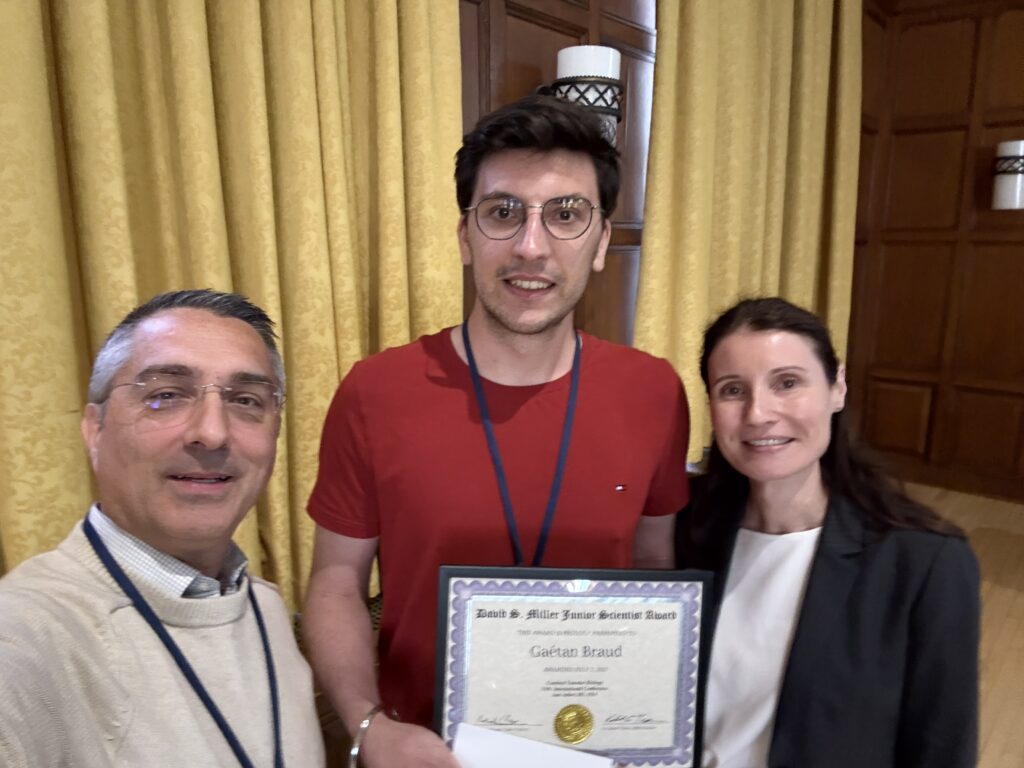
Anika and Bjoern established the David S. Miller Junior Scientist Award in 2016 to honor Dr. Miller’s legacy as a mentor and to support emerging researchers in the brain barriers field. The award recognizes early-career scientists conducting innovative and impactful research. This year, Anika presented the award to Dr. Gaétan Braud of INSERM, France, in recognition of his promising work on regulating blood–CNS barrier integrity in health and disease.

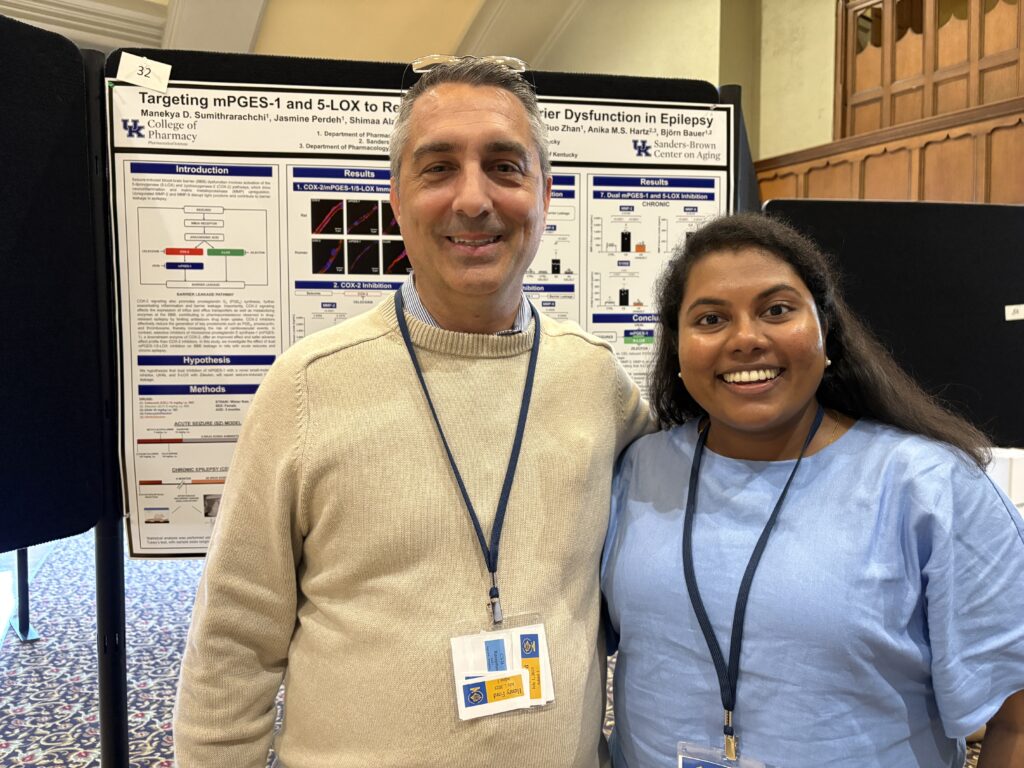
Manekya, Anika, and Bjoern recently participated in the CVB2025 Meeting in Ann Arbor, MI. Manekya presented a poster on the therapeutic potential of mPGES-1 and 5-LOX inhibition to repair blood-brain barrier dysfunction in epilepsy. Anika was an invited speaker and delivered a talk on blood-brain barrier disruption in Alzheimer’s disease. Bjoern gave a short presentation on targeting endocannabinoid signaling for blood-brain barrier repair and seizure control in epilepsy.

A special summer seminar was co-organized by Anika, Bjoern, and Dr Ann Stowe, featuring guest speaker Dr. Britta Engelhardt, Director of the Theodor Kocher Institute at the University of Bern, Switzerland. Dr. Engelhardt is a globally recognized leader in immunobiology and an expert on the blood-brain barrier. She presented a seminar titled “Understanding How the Brain Barriers Orchestrate CNS Immune Privilege” on Thursday, June 26.

Congratulations to Manekya on successfully passing her PhD qualifying exam! This milestone reflects her hard work, preparation, and growing scientific expertise. With this achievement, Manekya advances to PhD candidacy and begins the next phase of her doctoral research. We are proud of her accomplishment and look forward to supporting her continued success. Congratulations, Manekya!

Manekya received a Pharmaceutical Sciences Graduate Student Travel Award to attend the CVB 2025 Conference in Ann Arbor, MI. This award will allow Manekya to present a poster of her research, engage with leading scientists in the field, and gain valuable insight into current trends and advances in blood-brain barrier science. Congratulations Manekya!

Bjoern has been selected as the Patrick DeLuca Endowed Professor of Pharmaceutical Technology, honoring his outstanding record of service, research excellence, and leadership within the College of Pharmacy. This prestigious appointment recognizes Bjoern’s significant contributions to pharmaceutical innovation and his dedication to advancing the field. Congratulations on this well-deserved honor, Bjoern!

Bjoern has been honored by the PY1 pharmacy students as the Outstanding PY1 Professor in the College of Pharmacy. This student-nominated award recognizes Bjoern’s commitment to excellence in teaching, mentorship, and inspiring first-year PharmD students. His engaging course delivery, supportive guidance, and unwavering dedication have left a meaningful impact on the next generation of pharmacists. Congratulations, Bjoern!

Oxidative stress contributes to blood–brain barrier leakage, renal dysfunction, and cognitive decline in Alzheimer’s disease. In this study, the team used 5xFAD mice to show that N-acetylcysteine (NAC) reduces Aβ-induced oxidative damage and improves cognition and organ function. Congratulations Atcharaporn and team!

We celebrated Atcharaporn and Ramtin for their amazing work and dedication over the past two years in the lab with a going-away lunch at KPOT. Thank you both for everything—you will be missed, and we’re excited to see where your next chapters take you!

Anika attended the AD/PD2025 conference in Vienna, Austria, where she co-chaired the session “Cerebrovascular Changes, CAA, BBB” alongside Dr. Shinobu Kitazume. She was also invited to present our recent work titled “Blood-Brain Barrier Dysfunction in Alzheimer’s Disease with Epilepsy: New Mechanistic Insights and Therapeutic Strategies.”

Anika has been invited to give a talk titled “Blood-Brain Barrier Dysfunction in Alzheimer’s Disease: An Environmental Health Perspective” at the ABC2025 meeting in Innsbruck, Austria, on March 2. The ABC2025 meeting brings together leading scientists from around the world to discuss the latest advancements in ABC transporter proteins, covering both basic and applied aspects.

BHL proudly celebrates Atcharaporn’s perfect Bradford with a team pizza party! This long-standing tradition has remained a rare achievement, with only a few members reaching this high standard— the last in 2020. Atcharaporn’s achievement is even more special as she is the first in the lab to reach this milestone with a sample! We look forward to celebrating many more of these milestones in the future!

The BHL team takes the plunge at the Lexington Polar Plunge! The team fundraised a total of $1,308 for Special Olympics Kentucky, which supports individuals with intellectual disabilities. This tradition started back in 2011 when the lab, then located in Minnesota, joined nearly 900 participants in the Polar Bear Plunge and jumped into the below freezing temperatures of Lake Superior. The current team was lucky that, despite the rain, their plunge was only a frigid 46° F. The team couldn’t be more excited to do it again next year!

View a brief summary of the paper in video format!
Do You Know the Two Luciferase-Expressing Mouse Glioblastoma Models? | Encyclopedia MDPI
Neurovascular deficits and blood-brain barrier (BBB) dysfunction are major hallmarks of brain trauma and neurodegenerative diseases. Oxidative stress is a prominent contributor to neurovascular unit (NVU) dysfunction and can propagate BBB disruption. Oxidative damage results in an imbalance of mitochondrial homeostasis, which can further drive functional impairment of brain capillaries. To this end, we developed a method to track mitochondrial-related changes after oxidative stress in the context of neurovascular pathophysiology as a critical endophenotype of neurodegenerative diseases.

Our collaborative work with Dr. Gold and his team underscores the potential of combining blood biomarkers and brain imaging to identify early signs of vascular contributions to cognitive decline. By measuring levels of S100b, an indirect marker of blood-brain barrier leakage, and pairing it with advanced neuroimaging, we identified patterns associated with memory loss in older adults. The findings underscore how a multimodal approach can better predict who’s at risk for vascular cognitive impairment and dementia (VCID).

This study highlights plasma S100β as a promising non-invasive biomarker for early detection and progression monitoring of Alzheimer’s disease. Given its strong association with cognitive decline and AD pathology, S100β could serve as a valuable diagnostic tool, addressing the urgent need for accessible biomarkers to guide early interventions and treatment strategies.